From Years to Months: Generative AI Is Reinventing the Drug Discovery Pipeline
The mathematics of traditional drug development has always been brutal. On average, bringing a single new medicine from target identification to pharmacy shelf takes between ten and fifteen years and costs north of $2.5 billion — and the vast majority of candidates fail somewhere along the way. The human cost of that timeline is measured not just in dollars, but in the years patients spend waiting for treatments that might save their lives. In 2026, generative artificial intelligence is fundamentally challenging those numbers, designing novel molecules at speeds and scales that were unthinkable just five years ago.
✦ ✦ ✦
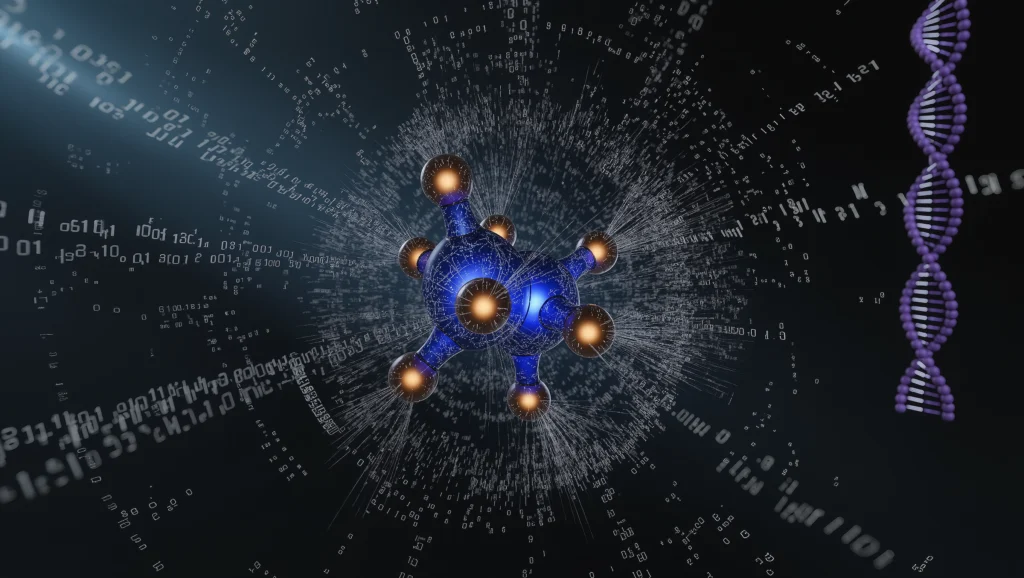
Generative AI models — including large language models trained on chemical and biological data, along with specialized architectures like diffusion models and variational autoencoders — can now design candidate drug molecules from scratch. Rather than screening thousands of existing compounds for a desired effect, researchers can instruct AI systems to generate entirely new molecular structures optimized for specific biological targets, membrane permeability, and toxicity profiles simultaneously. The World Economic Forum reported in early 2026 on a real-world example where researchers used generative AI to computationally design 15 million potential compounds and then narrowed laboratory testing to roughly 60 — a transformation in the ratio of virtual work to physical work that would have been impossible without AI. Companies like Chai Discovery have reported AI-generated molecules achieving experimental success rates far above historical averages, according to AI World Journal.
“2026 will see drug discovery transformed by generative AI, quantum computing, and synthetic biology — AI-driven molecule design and virtual screening are compressing timelines and reducing costs.”
The convergence of generative AI with adjacent technologies is amplifying the effect. Quantum simulations are beginning to contribute to protein folding prediction and modeling of drug-receptor interactions at atomic resolution. Synthetic biology is enabling the design of programmable cells as therapeutic agents. Decentralized clinical trials, supported by AI-driven real-world data platforms, are making research more inclusive and dramatically more efficient, as Drug Discovery World noted in a 2026 industry outlook. Deloitte’s 2026 Life Sciences Outlook found that 41% of respondents identified generative AI as a significant influence on research and operations, and 48% cited accelerated digital transformation as a key priority — a clear signal that the field has moved past skepticism and into execution mode.
The obstacles that remain are real, and researchers are honest about them. Data quality remains a foundational challenge: AI models are only as good as the datasets they learn from, and biases in training data can propagate into drug candidates that work well for some populations but not others. Regulatory agencies in both the U.S. and EU are actively developing frameworks to require transparency, auditability, and reproducible validation for AI-designed drug candidates. But the direction of travel is unmistakable. As pharma-journal.com observed in January 2026, AI has become an enabling layer across discovery, development, and operations rather than a standalone initiative — and for organizations that can integrate computation with translational biology and high-quality data governance, the competitive advantage is profound. The race to cure disease has a powerful new participant.
Sources & References
- Drug Discovery World. (Mar 2026). Drug Discovery and Development in 2026. ddw-online.com
- World Economic Forum. (Jan 2026). Here’s How AI Is Reshaping Drug Discovery. weforum.org
- AI World Journal. (Dec 2025). 2026: The Year AI Reinvents Drug Discovery. aiworldjournal.com
- Ardigen. (Feb 2026). AI in Biotech: Lessons from 2025 and the Trends Shaping Drug Discovery in 2026. ardigen.com
- Pharma Journal. (Jan 2026). AI in Pharma 2026 Drives Faster Drug Discovery. pharma-journal.com
- NIH / PMC. (2025). Applications of Artificial Intelligence in Biotech Drug Discovery and Product Development. PubMed Central
- NIH / PMC. (2025). Deep Generative AI for Multi-Target Therapeutic Design. PubMed Central
Article 03 of 03 · Drug Discovery