
The Hidden World of Experimental Tech
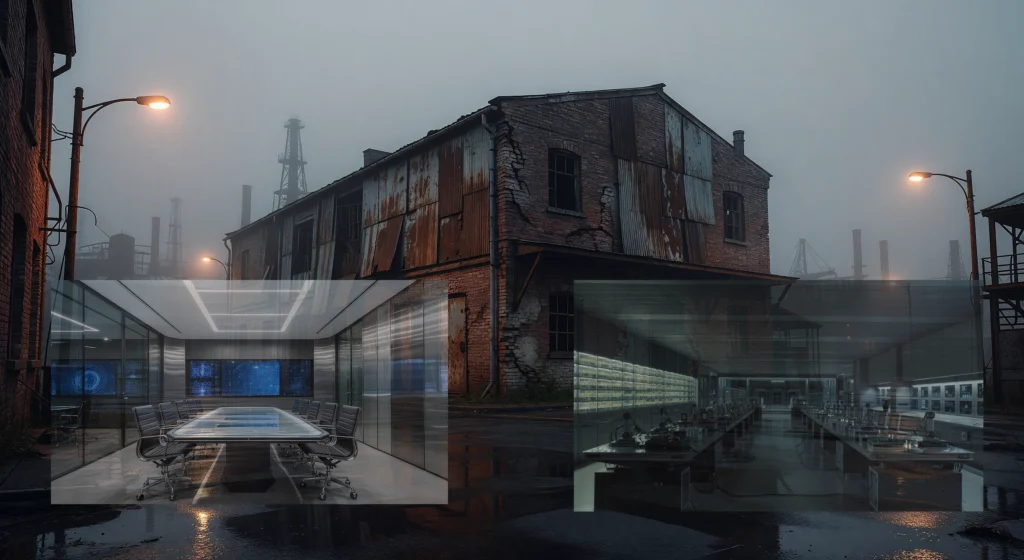
Tucked away in an unassuming, forgotten corner of the industrial district, masked by a facade of crumbling brick and rusted corrugated steel, lay the clandestine warehouse. To the casual observer, this forgotten sector of the city was nothing more than a monument to a bygone era of manufacturing, a place where progress had long since halted. However, beneath this carefully curated exterior of urban decay, a different kind of revolution was quietly taking place. No signage hinted at its true purpose, and the overgrown, unkempt surroundings actively discouraged casual observation. The weeds that choked the cracked pavement and the shattered glass that littered the alleyways were not signs of neglect, but rather a deliberate barrier designed to keep the curious at bay.
The Perfect Disguise for Clandestine Operations
In the world of high-stakes technological advancement, secrecy is often the most valuable currency. The creators of this hidden sanctuary understood that the best way to hide a multi-billion-dollar operation was to place it exactly where no one would ever think to look. The psychological effect of urban decay serves as an impeccable camouflage. People naturally avert their eyes from ruins, hurrying past the forgotten monuments of the industrial age. By choosing a location that repels attention, the architects of this facility ensured their work could proceed without the prying eyes of corporate rivals, ambitious journalists, or overzealous government regulators.
Architecture of Deception
The exterior was a masterpiece of misdirection. What appeared to be rotting wood and failing masonry was, in reality, a reinforced shell of military-grade composite materials. Inside, beyond the reinforced, soundproofed walls, the atmosphere shifted dramatically. The transition from the dead, silent exterior to the vibrant, humming interior was jarring. The air hummed with a low, constant thrum of suppressed power, a vibration that you could feel in your marrow before you could hear it with your ears. This was not the sound of failing infrastructure, but the steady heartbeat of a facility drawing immense amounts of energy to fuel its clandestine endeavors.
Inside the Clandestine Warehouse: A Symphony of Suppressed Power
Once inside the heavily fortified perimeter, the true scale of the operation became apparent. Shadows clung to towering racks shrouded in thick, dust-resistant tarps, beneath which the faint outlines of advanced, experimental technology could be discerned. These were not mere blueprints or theoretical models; they were physical prototypes that whispered of breakthroughs years, perhaps decades, ahead of their time. The sheer volume of hardware housed within these walls suggested a research and development budget that could rival the gross domestic product of a small nation.
Shadows and Tarps: The Prototypes
What exactly was being built in the dark? The shapes beneath the tarps offered tantalizing clues to those who knew what to look for. Some resembled the sleek, aerodynamic chassis of next-generation autonomous vehicles, while others bore the unmistakable, intricate geometries of quantum computing cores. There were rumors in the darkest corners of the dark web about a facility developing clean, limitless energy sources, and looking at the massive conduits snaking across the ceiling, it was easy to believe those rumors were true. It is fascinating how the most groundbreaking advancements of our century remain effectively masked by a facade of crumbling brick and rusted corrugated steel, hidden from the very society they are destined to change.
The Sensory Experience of Innovation
The environment inside the warehouse was a stark contrast to the sterile, brightly lit laboratories typically associated with cutting-edge science. Here, the silence was heavy, almost oppressive, broken only by the occasional whir of unseen machinery and the metallic tang of ozone in the air. That distinct smell of ozone—sharp, clean, and electric—was a constant reminder of the high-voltage experiments taking place just out of sight. It was a testament to the potent, volatile secrets kept within its dark, secluded confines.
The Burden of Volatile Secrets
Operating in such extreme secrecy comes with its own set of unique, heavy challenges. The engineers and scientists who worked within these walls were ghosts, individuals who had traded public recognition and academic accolades for the opportunity to work on the absolute bleeding edge of human knowledge. They understood that the technology they were developing was too dangerous, too disruptive to be released into the world prematurely. A sudden breakthrough in energy generation or artificial intelligence could destabilize global economies overnight if not introduced carefully and deliberately.
Conclusion: The Future Hidden in the Past
As we navigate our modern, hyper-connected cities, it is worth remembering that the future is not always born in gleaming glass skyscrapers or sprawling Silicon Valley campuses. Sometimes, the most profound leaps forward are gestating in the shadows. The clandestine warehouse stands as a monument to human ingenuity and the extreme lengths to which we will go to protect our most valuable ideas. It reminds us that appearances can be profoundly deceiving, and that the next great technological leap might just be waiting in a forgotten alleyway, quietly humming with power, waiting for the perfect moment to reveal itself to the world.

Welcome to hydeworkshop.com.