Originally published: May 20, 2026
Last reviewed and corrected: July 26, 2026
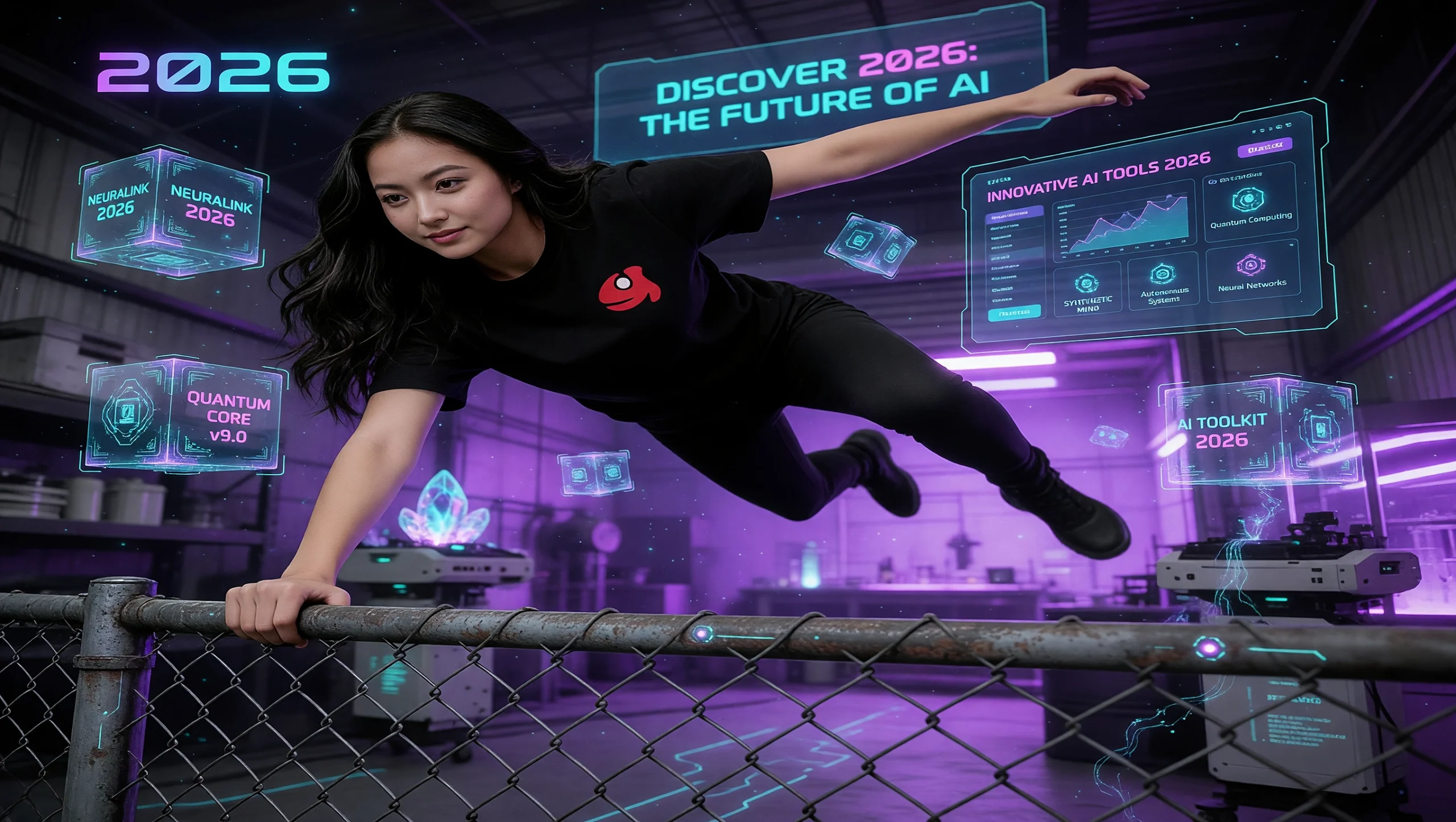
Latest AI products are reshaping 2026 faster than most small businesses, creators, and website owners can evaluate them. The shift is no longer limited to chatbots that answer questions. The current wave includes coding agents, cybersecurity systems, creative platforms, context engines, computer-use models, and personal agents that can act across files, applications, websites, and business systems.
That expansion creates real value, but it also creates a larger failure surface. An AI system that can edit code, access business data, send messages, or operate software requires more scrutiny than a basic writing assistant.
Hyde Workshop evaluates these systems through the Cain and Abel Framework:
- Cain exposes hidden friction, excessive authority, privacy risks, unclear pricing, weak evidence, and automation that is difficult to reverse.
- Abel measures practical value, clarity, accessibility, time savings, safer collaboration, and stronger human decision-making.
- A.M.A.N.D.A. determines whether a product should be adopted, tested, supervised, restricted, or avoided.
The following nine AI products and systems represent some of the most important changes shaping development, cybersecurity, creative work, and agentic productivity in 2026.
AI for Developers: Coding Agents Become Operational Systems
Coding assistants are moving beyond autocomplete. Newer systems can inspect repositories, create plans, edit multiple files, run commands, coordinate subagents, and prepare changes for human review.
That capability can accelerate development, but it can also introduce broken dependencies, insecure code, unintended file changes, or production failures when agents receive too much authority.
1. Grok Build: Plan, Review, and Approve Before Execution
xAI announced Grok Build on May 25, 2026, as an early-beta terminal coding agent for professional software engineering and complex coding work. Initial access was offered to SuperGrok and X Premium Plus subscribers—not only to a separate “Heavy” subscription tier.
For complex assignments, Grok Build can begin in a planning mode. The user can approve the plan, comment on individual steps, or rewrite it before execution. After approval, proposed changes appear as clean diffs for inspection. In July 2026, xAI also released the Grok Build harness as open-source software.
Cain risk: A terminal agent may read files, run commands, modify repositories, or interact with development tools. An incorrect plan can still create substantial damage when permissions are too broad.
Abel value: Plan-first execution and reviewable diffs make the agent’s intended actions easier to understand before code is changed.
A.M.A.N.D.A. verdict: Test Grok Build inside a local repository, disposable branch, container, or staging environment. Require human approval before commits, deployments, dependency changes, database work, or production access.
2. Cursor Composer 2.5: Better Long-Running Coding Work
Cursor released Composer 2.5 on May 18, 2026. Cursor describes it as an improvement over Composer 2 for sustained, long-running tasks, complex instruction-following, communication, and effort calibration.
Composer 2.5 uses the same Kimi K2.5 open-source checkpoint as Composer 2. Cursor says its training improvements include more difficult reinforcement-learning environments and targeted textual feedback intended to improve specific behaviors rather than rewarding only the final result.
Cain risk: Long-running agents can accumulate mistaken assumptions across multiple files and actions. A technically polished result may still conflict with the project’s architecture, security requirements, accessibility standards, or business intent.
Abel value: Better instruction-following and sustained work can make Composer useful for refactoring, debugging, documentation, testing, and larger repository tasks.
A.M.A.N.D.A. verdict: Give the agent a precise task definition, coding standards, prohibited files, test requirements, and rollback procedure. Review every diff before merging.
3. Redis Iris: Building a Context Layer for AI Agents
Redis introduced Redis Iris on May 18, 2026 as a context engine for AI agents. It is designed to address production problems such as stale state, fragmented memory, slow retrieval, disconnected tools, and sessions that fail to build on earlier work.
Redis positions Iris as a governed, agent-readable view of operational information. Its supporting components include context-retrieval and agent-memory capabilities intended to help systems work with current business entities, relationships, policies, and prior interactions.
Cain risk: Centralized context can expose sensitive operational information when access controls, retention rules, and tenant boundaries are weak.
Abel value: Better context can reduce under-informed answers and help agents operate with more current, relevant business data.
A.M.A.N.D.A. verdict: Treat agent memory as governed business infrastructure. Define what information can be stored, who can retrieve it, how long it is retained, and which actions require additional authorization.
AI Cybersecurity: Models Move From Discovery Toward Patching
Cybersecurity models are becoming capable of identifying vulnerabilities, generating fixes, and supporting longer defensive workflows. This may help defenders repair software more quickly, but the same underlying capabilities can also increase offensive risk.
4. OpenAI Daybreak: From Vulnerability Discovery to Patch Automation
OpenAI published its expanded Daybreak initiative on June 22, 2026—not May 20.
Daybreak combines cybersecurity models, Codex Security workflows, trusted-access programs, partnerships, monitoring, and human expertise. OpenAI describes the initiative as an effort to move beyond vulnerability discovery and accelerate end-to-end patch automation.
The announcement included the full version of GPT-5.5-Cyber through a continued limited release to trusted defenders, a Daybreak Cyber Partner Program, and work intended to help identify, validate, and repair vulnerabilities in important software systems.
Cain risk: Advanced vulnerability-discovery models are dual-use systems. Poor access control, premature disclosure, or weak coordination with software maintainers could create serious harm.
Abel value: Defensive teams may be able to move more quickly from identifying a weakness to validating and repairing it.
A.M.A.N.D.A. verdict: Daybreak should be described as a controlled cybersecurity initiative—not a general-purpose consumer security scanner. Human security professionals, coordinated disclosure, trusted access, and patch verification remain essential.
5. Claude Mythos: Powerful Cybersecurity Capability With Restricted Access
Anthropic announced Claude Mythos Preview and Project Glasswing on April 7, 2026. Anthropic reported that the model demonstrated unusually strong cybersecurity capabilities, including the ability to identify and exploit previously unknown vulnerabilities when directed to do so.
Anthropic later introduced Mythos 5 as an upgrade for a small group of vetted cyberdefenders and infrastructure partners. Access remains restricted rather than broadly available to ordinary consumers. Project Glasswing is intended to apply these capabilities to defensive cybersecurity work involving important software and infrastructure.
Cain risk: A model capable of discovering or exploiting serious vulnerabilities presents obvious dual-use and access-control concerns.
Abel value: Carefully governed deployments can help qualified defenders locate and repair vulnerabilities that conventional processes may miss.
A.M.A.N.D.A. verdict: Mythos belongs behind strict identity verification, logging, disclosure procedures, restricted environments, and authorized security teams. It should not be presented as a normal security tool for unverified users.
Creative AI: Generation Becomes Editable and Workspace-Native
Creative AI is evolving from one-shot image generation toward structured editing, collaboration, multimodal creation, and integration with existing production tools.
6. Google Pics: Object-Level Image Creation and Editing
Google announced Google Pics at Google I/O on May 19, 2026. Pics is an AI image-creation and editing application built on Google’s Nano Banana model.
Google says Pics treats design elements as editable objects rather than flattening the entire image into one static output. Users can move objects, update text, create assets from a blank canvas, edit existing images, and collaborate through shared canvases.
Google initially released Pics to a limited group of trusted testers and announced a broader summer rollout for Google AI Pro and Ultra subscribers and a preview for Google Workspace business customers.
Cain risk: AI-generated marketing materials can contain incorrect text, distorted brand elements, misleading imagery, copyright concerns, or inconsistent visual identity.
Abel value: Object-level editing and Workspace integration could make professional-looking visual production more accessible to educators, creators, and small businesses without full design teams.
A.M.A.N.D.A. verdict: Use Pics to accelerate drafts and variations, but preserve human review for brand accuracy, accessibility, licensing, image authenticity, and final publishing decisions.
7. Gemini Omni: Multimodal Creation From Video and Other Inputs
Google introduced the Gemini Omni family at I/O 2026. Google describes Omni as a multimodal system designed to create from different input types, beginning with video.
Gemini Omni Flash began rolling out through the Gemini app, Google Flow, and YouTube Shorts. Its editing system can maintain context across multiple conversational revisions, allowing users to change environments, angles, styles, and individual details without restarting the project.
Cain risk: Multimodal systems can make manipulated media more convincing and may blur the distinction between documentation, illustration, advertising, and synthetic content.
Abel value: Creators can iterate on complex media through conversational editing rather than rebuilding every asset from the beginning.
A.M.A.N.D.A. verdict: Use provenance disclosures, preserve original source files, document major edits, and clearly label synthetic or materially altered media where context requires it.
Agentic Productivity: AI Moves From Answering to Acting
The most significant change in 2026 is not simply improved language generation. It is the emergence of systems that can navigate applications, use tools, complete multi-step tasks, and continue working after the original prompt.
8. Gemini Spark: A Personal Agent That Can Work Across Apps
Google introduced Gemini Spark on May 19, 2026 as a 24/7 personal AI agent designed to act on the user’s behalf while remaining under the user’s direction.
Google says Spark can connect information across Google products and assist with longer tasks. Its design includes confirmation before high-stakes actions such as sending emails or adding calendar events.
By June 30, 2026, Google had released Gemini Spark for macOS in beta to eligible Google AI Ultra subscribers aged 18 or older in the United States. Google also described future remote-task capabilities that would allow a user to assign work from another device.
Cain risk: An always-available agent connected to email, files, calendars, and applications creates substantial privacy, prompt-injection, identity, and authority risks.
Abel value: A supervised agent could reduce repetitive administrative work and help users coordinate information across otherwise disconnected applications.
A.M.A.N.D.A. verdict: Connect one application at a time. Use minimum permissions, require confirmation for external communication, and prohibit autonomous spending, deletion, publication, customer contact, or account changes.
9. Gemini 3.5 Flash: Speed Combined With Agentic Action
Google released Gemini 3.5 Flash on May 19, 2026 as the first model in its Gemini 3.5 family.
Google positions 3.5 Flash as a model for coding, multimodal understanding, and long-horizon agentic workflows. Google reports that it runs four times faster than other frontier models when measured by output tokens per second, although that is a vendor-reported comparison rather than an independent Hyde Workshop benchmark.
The model is available through the Gemini app and AI Mode in Google Search, through the Gemini API and Google AI Studio for developers, and through Google’s enterprise platforms. Google later added built-in computer-use capabilities for agents that can interact across browser, mobile, and desktop environments.
Cain risk: Computer-use models can misinterpret interfaces, follow malicious instructions embedded in webpages, click the wrong control, or execute irreversible actions.
Abel value: Built-in computer use can help automate testing, accessibility review, knowledge work, application navigation, and other repetitive multi-step processes.
A.M.A.N.D.A. verdict: Keep computer-use agents inside controlled environments. Require explicit confirmation before sensitive or irreversible actions and stop tasks when prompt injection or unexpected behavior is detected.
What These Latest AI Products Mean for Small Businesses
Most small businesses do not need all nine systems. The practical goal is not to assemble the largest AI stack. It is to identify one recurring problem that AI can help solve without creating disproportionate risk.
Suitable starting tasks include:
- Preparing article outlines.
- Summarizing non-confidential research.
- Reviewing draft SEO metadata.
- Organizing content calendars.
- Creating visual concepts.
- Drafting customer-support responses for human review.
- Reviewing code inside a staging environment.
- Producing checklists and project documentation.
- Summarizing analytics without making autonomous business decisions.
High-risk actions should remain behind a human approval gate, including:
- Publishing or deleting website content.
- Changing prices or financial records.
- Sending customer emails.
- Accessing private customer information.
- Installing plugins or dependencies.
- Editing production code.
- Deploying to a live website.
- Granting credentials or administrator access.
- Making legal, medical, employment, or financial decisions.
How to Evaluate a New AI Product
Before adopting one of the latest AI products, use the following review process.
1. Verify the official source
Confirm the product name, announcement date, access requirements, pricing, geographic availability, and beta status through the vendor’s official website.
2. Define the exact task
Do not connect an agent to an entire business merely to “see what it can do.” Give it one clear, measurable assignment.
3. Start with low-risk information
Use sample content, test repositories, staging sites, synthetic customer records, or non-confidential documents during the initial evaluation.
4. Review permissions
Determine which files, tools, accounts, databases, or applications the system can access. Remove permissions that are not necessary for the assigned task.
5. Require human approval
Publishing, deployment, spending, deletion, customer communication, and account changes should require confirmation from an authorized person.
6. Test recovery
A useful AI workflow needs a rollback path. Confirm that files, content, settings, and data can be restored when the agent makes an error.
7. Measure actual value
Compare the time saved against subscription cost, review time, correction work, privacy exposure, and workflow complexity.
Where to Explore More AI Tools on Hyde Workshop
Use the Hyde Workshop AI Lab to compare assistants, coding agents, creative systems, automation platforms, standards, permissions, and A.M.A.N.D.A. verdicts.
Follow Forge News for continuing coverage of AI tools, agentic workflows, WordPress systems, cybersecurity controls, and human-governed automation.
Read AI Agents for Websites to learn how small businesses can use research, content, SEO, coding, and analytics assistants without surrendering control.
Enter the AI Forge to examine Cain risk, Abel value, permissions, governance, monitoring, testing, and recovery before deploying an AI workflow.
For help evaluating a tool stack, WordPress workflow, or supervised automation system, use the Hyde Workshop contact page to request an AI workflow audit.
Frequently Asked Questions About the Latest AI Products
What are the most important AI product trends in 2026?
The major trends include coding agents, computer-use systems, AI-assisted cybersecurity, multimodal creative platforms, persistent context and memory, and personal agents that can complete multi-step tasks across connected applications.
Are AI agents replacing normal chatbots?
Not completely. Chatbots remain useful for conversation, drafting, and research. Agents add planning, tool use, memory, application access, and multi-step execution. That additional authority requires stronger permissions and human oversight.
Should small businesses use autonomous AI agents?
Small businesses should begin with supervised assistance rather than full autonomy. AI can prepare research, drafts, reports, code changes, or workflow recommendations, but consequential actions should require human approval.
How should businesses verify claims about new AI tools?
Check official vendor announcements, documentation, pricing pages, release notes, and system cards. Distinguish between demonstrations, limited previews, beta releases, and generally available products.
What is the safest first AI workflow?
Begin with a low-risk, reversible task such as organizing content ideas, reviewing SEO metadata, summarizing analytics, creating a draft image concept, or checking code inside a staging environment.
Final Take: Cain Versus Abel in 2026
The latest AI products reveal a clear divide.
The Cain path appears when systems receive broad access, operate invisibly, publish without review, retain sensitive information without clear limits, or make irreversible decisions without human authorization.
The Abel path appears when AI makes work clearer, faster, more accessible, and easier to verify—while people retain control over permissions, judgment, deployment, and final approval.
Grok Build’s plan-before-execution workflow, Redis Iris’s governed context model, Google Pics’ editable creative structure, and the confirmation controls described for Gemini Spark illustrate the direction responsible AI products should take. Capability alone is not enough. The workflow must also expose what the system can access, what it intends to do, and how a person can stop or reverse it.
This is not simply another AI product roundup. It documents the moment when artificial intelligence is moving from something people ask for information to something they may authorize to act.
A.M.A.N.D.A.’s verdict is therefore clear:
Do not adopt an AI product because it appears powerful. Adopt it only when its value is measurable, its authority is limited, its evidence is reviewable, and a human remains responsible for the final decision.